
How to Style a Rug in an Open-Plan Living Room
Quick answer: The best way to style a rug in an open-plan living room is to use it to define zones — place a large rug under the lounge setting so all front legs sit on it, and use a second rug to anchor the dining area separately.
Open-plan living rooms are the default in most Australian homes — and they are also the hardest rooms to get right with a rug. Without walls to define zones, a rug has to do the heavy lifting: anchoring furniture, separating the lounge from the dining area, and making a large floor plan feel intentional rather than empty.
This guide walks through the practical decisions — size, placement, colour and layering — so you end up with a rug that actually works in the space.

Start with size — bigger is almost always better
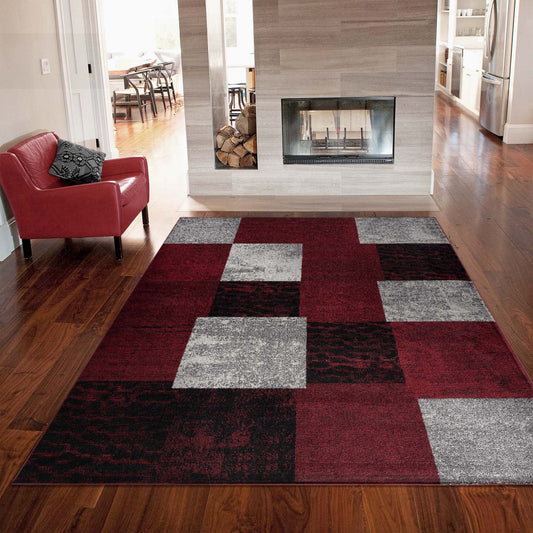
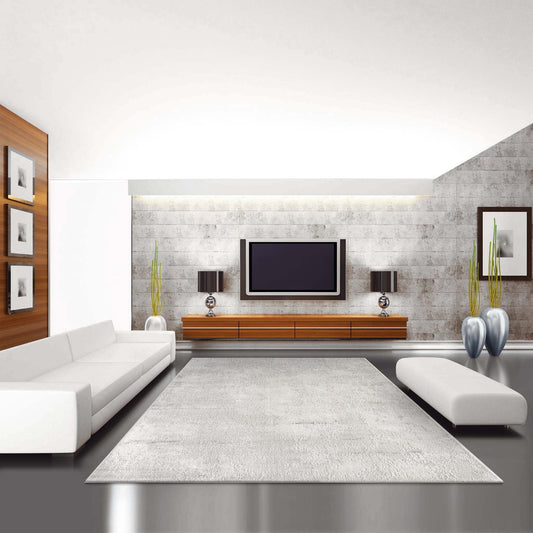
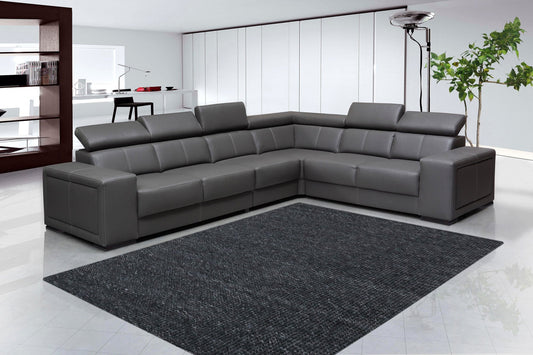
The most common mistake in open-plan rooms is choosing a rug that is too small. A rug that floats in the middle of the floor without touching any furniture looks like an afterthought. In an open-plan living zone, you generally want a 200cm x 290cm at minimum. For larger spaces, 240cm x 340cm or 300cm x 400cm is often the right call.
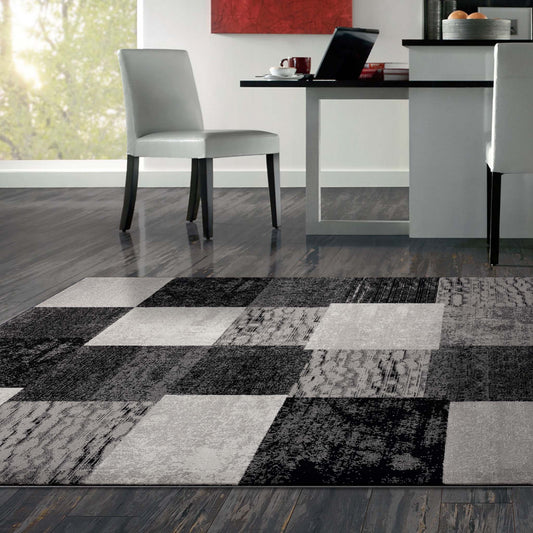
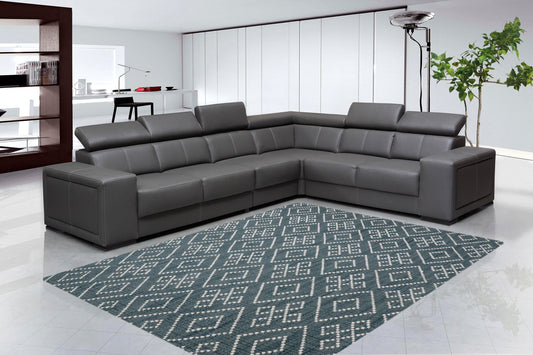
A good test: the front legs of every seat in the lounge grouping should sit on the rug. If the sofa is floating off the edge, the rug is too small for the space.
Use the rug to define zones
In an open-plan room, the rug IS the zone. It tells guests where the living area starts and the dining or kitchen space begins. Position the rug so it frames the seating arrangement — sofa, armchairs, coffee table — and leave clear floor between the rug edge and any adjacent zone (dining table, kitchen island, hallway).

If you have a combined living-dining space, consider two rugs: one under the lounge, one under the dining table. Two rectangular rugs in complementary tones create visual separation without needing a wall.
Choose colour based on what is already in the room
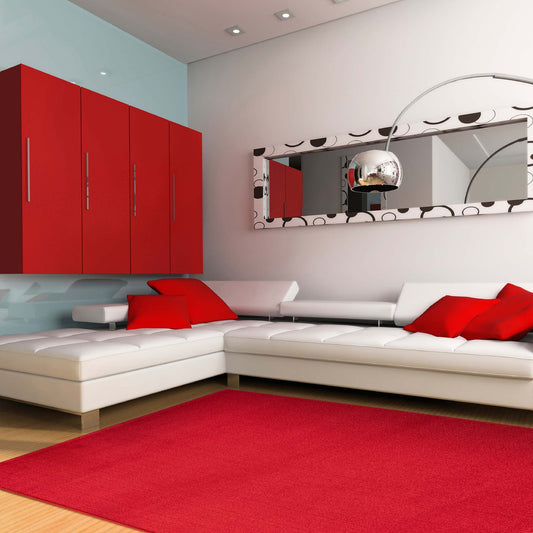
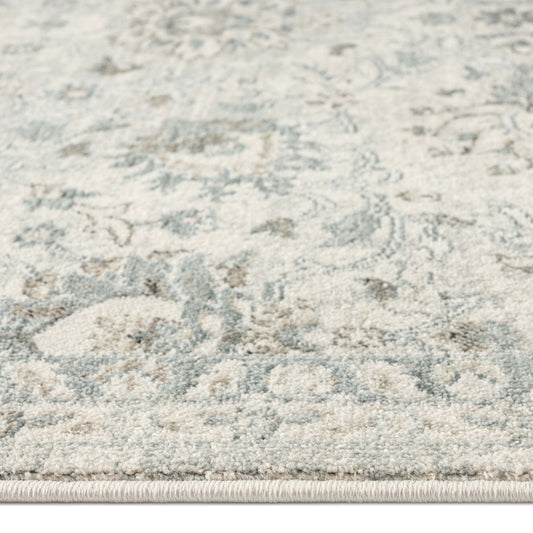
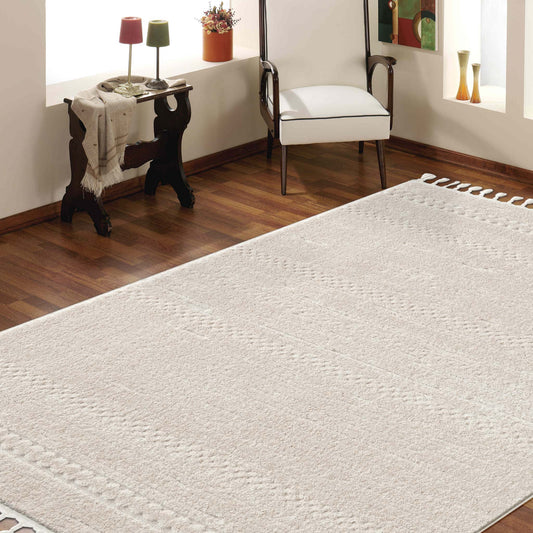
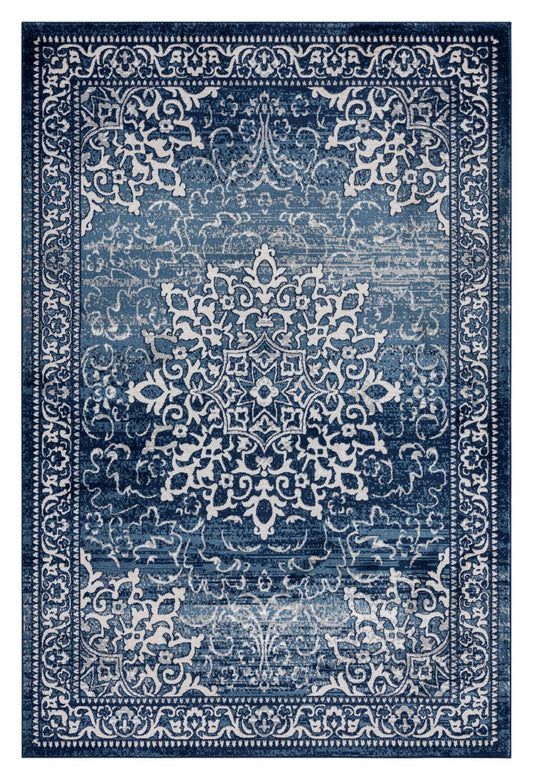
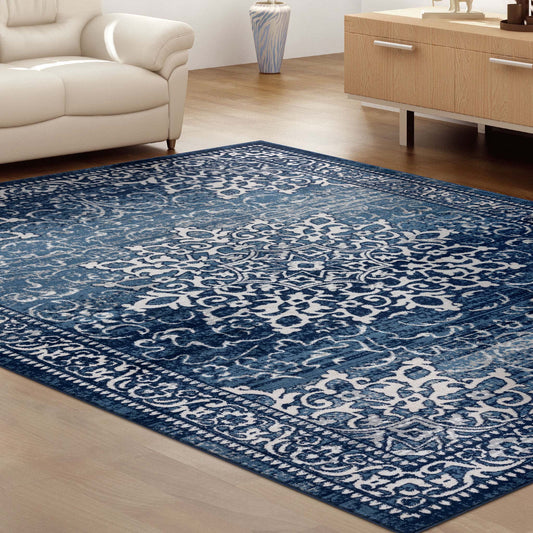
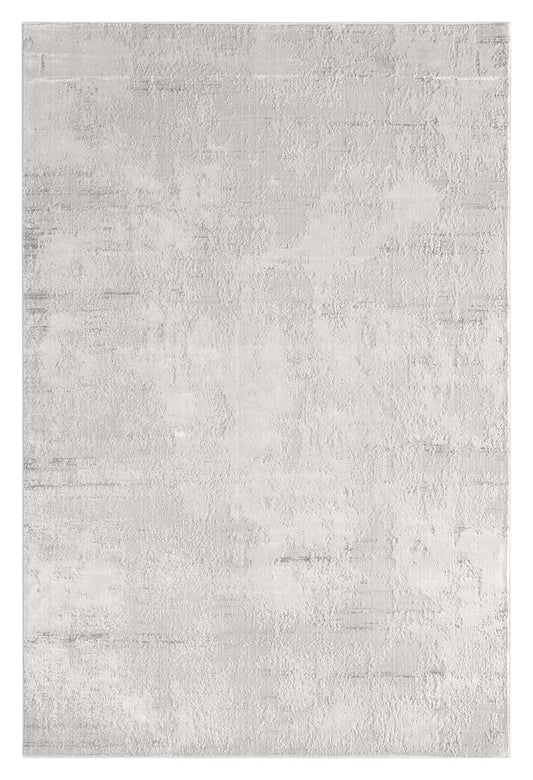
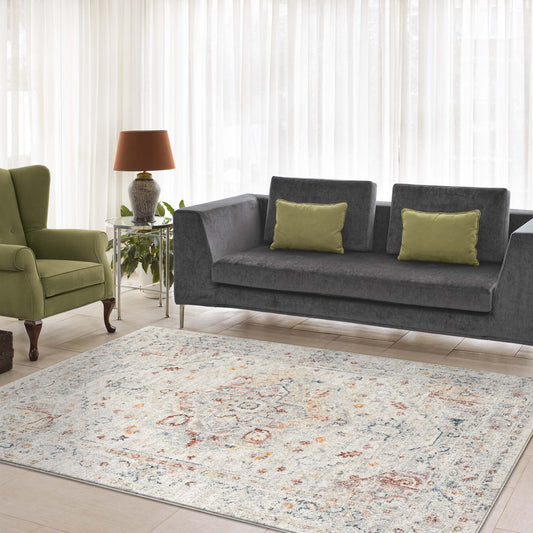
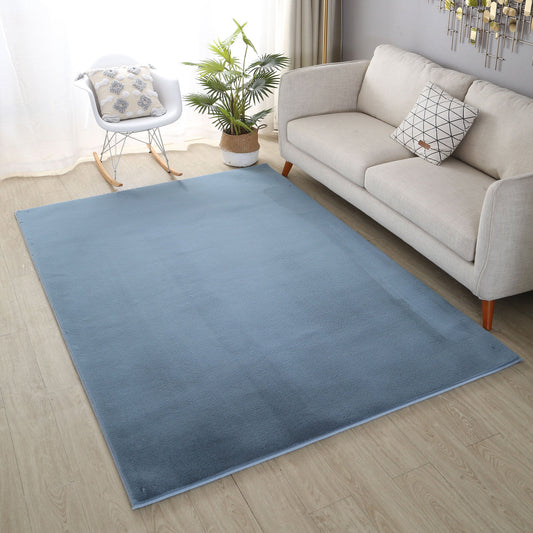
In open-plan homes, the rug colour should connect with the rest of the visible space — not just the sofa. Look at the kitchen cabinetry, the dining chairs, the wall paint and the flooring. A neutral rug in grey, beige or ivory is the safest choice because it ties to everything without competing. If the room is already neutral, a blue or multi-coloured rug adds personality without overwhelming the space.

Match the rug shape to the furniture layout
Most open-plan living rooms work best with a rectangular rug because the furniture is arranged in straight lines. If you have a circular coffee table or a curved sectional, a round rug can soften the layout and break up the hard edges of the room.
Pick a style that suits the room, not just the sofa
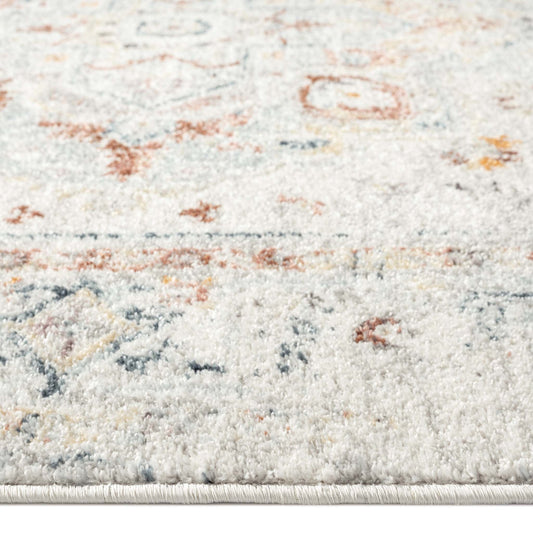
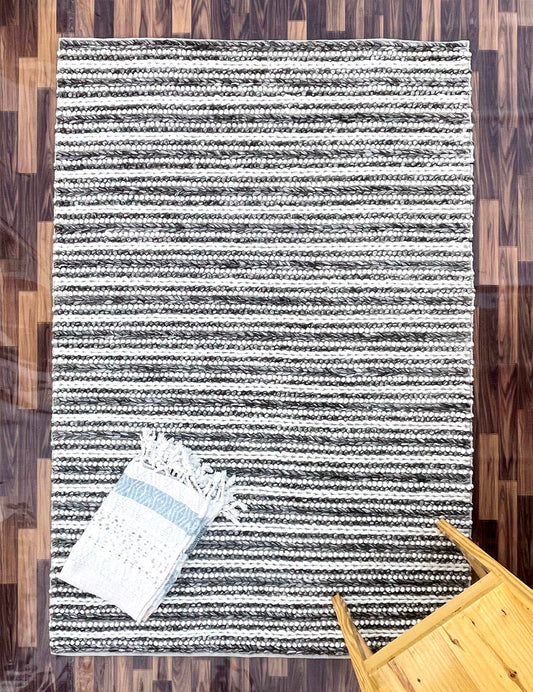
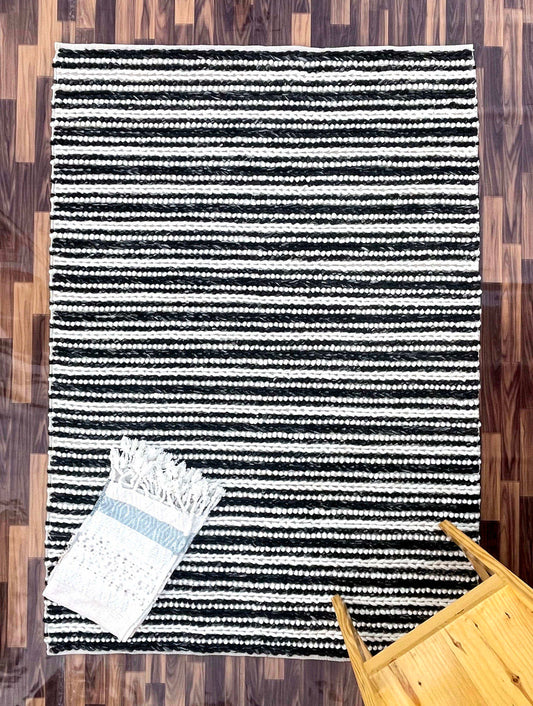
In an open-plan home, the rug is visible from the kitchen, the hallway and the dining area. That means bold patterns and loud colours carry further than they would in a closed room. Modern rugs with clean lines or subtle texture tend to work better in open-plan spaces than ornate traditional patterns, which can feel visually busy when seen from multiple angles.

Do not forget the hallway
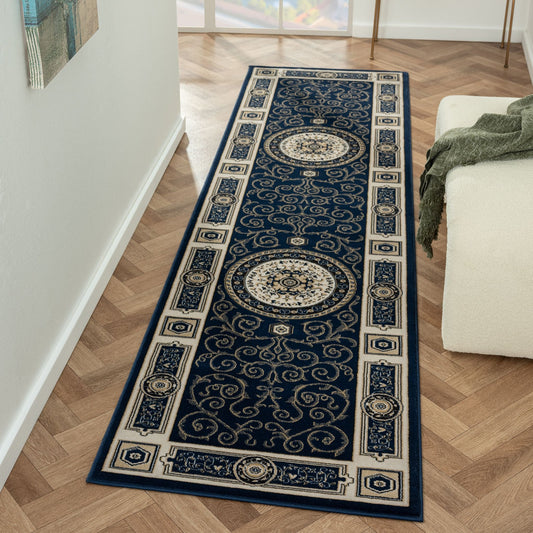
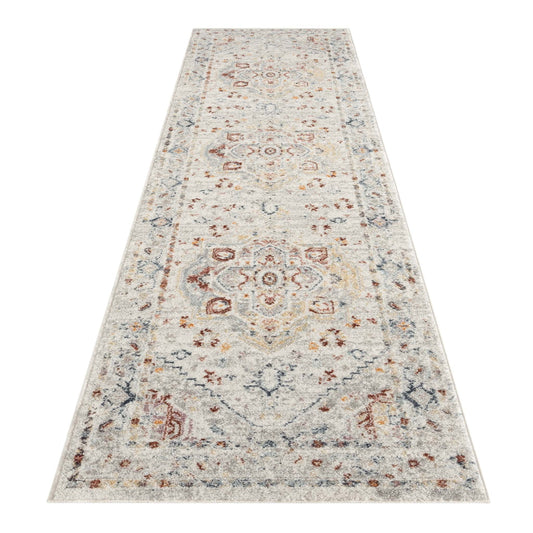
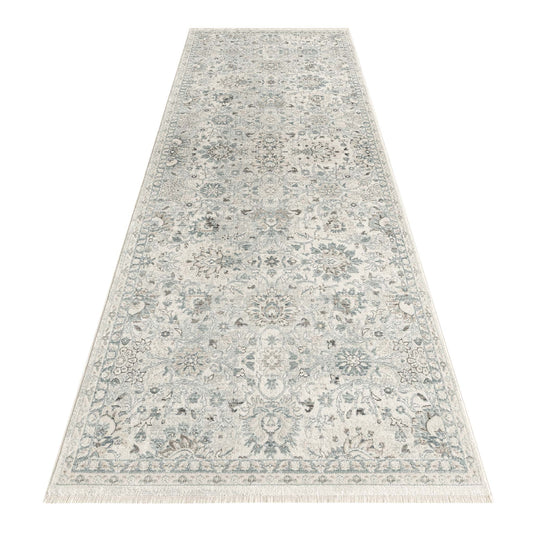
If your open-plan living room connects to a hallway or entry, a hallway runner in a complementary tone creates a visual bridge between the two spaces. The runner does not need to match the living room rug exactly — similar tones or the same brand range are enough to make the spaces feel connected.
Quick checklist
- Front legs of all seating on the rug
- At least 200cm x 290cm for most open-plan lounges
- Clear floor between rug edge and the next zone
- Rug colour connects with the whole visible space, not just the sofa
- Simple patterns carry better than ornate ones in open sightlines
Every rug at Rug Queen ships with free delivery Australia-wide. Browse living room rugs to find the right size and style for your open-plan space.