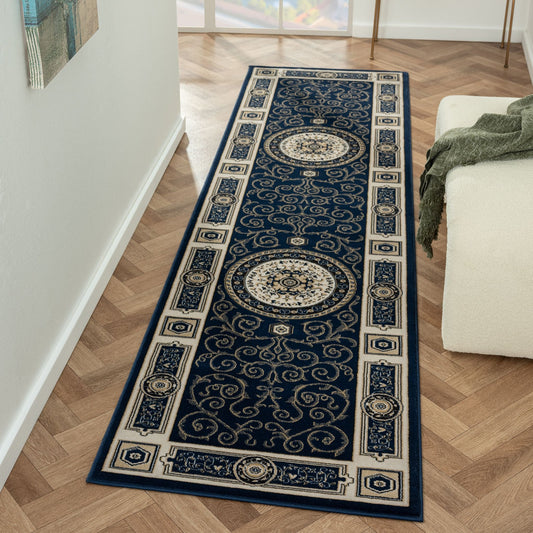
Hallway Runner Sizes: How to Choose the Right Length and Width
Share
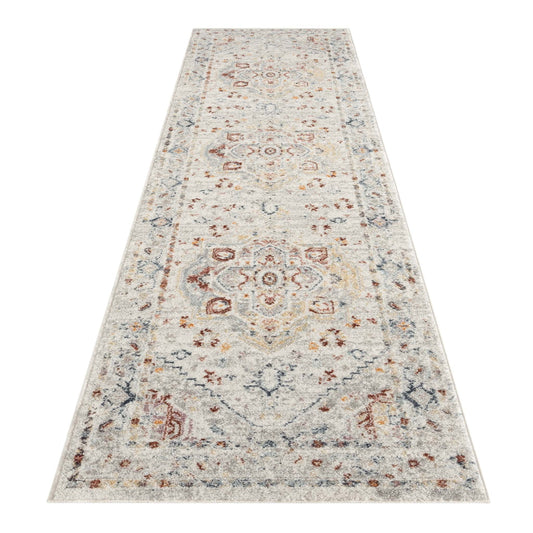
Quick answer: Choose a hallway runner that leaves 5–10 cm of visible floor on each side and finishes 30–40 cm short of the hallway’s full length. For a typical Australian hallway that means an 80 x 300 cm runner; short entries suit an 80 x 150 cm runner, narrow corridors a 66 x 244 cm runner, and wider hallways a 90 x 170 cm runner.
Why runner size matters more in hallways
A hallway is the hardest-working floor in the house — every trip from the front door, every school-bag drop, every load of washing passes through it. The right runner protects the floor along that exact traffic line, softens footsteps in what is usually the echoiest part of the home, and turns a plain corridor into something that actually looks finished. The wrong size does the opposite: too wide looks like wall-to-wall carpet that gave up; too short looks like it shrank in the wash.
Getting the width right
The rule is simple: leave a border of visible flooring on each side, roughly 5–10 cm. That strip of timber or tile frames the runner and makes the hallway look wider, not narrower.
Most Australian hallways are 100–120 cm wide, which is why 80 cm wide runners are the standard — they fit that border rule almost everywhere. If your hallway is narrower (under a metre), step down to a 66 cm wide runner. If it is genuinely wide, a 90 cm wide runner keeps the proportions balanced.
Getting the length right
Measure the full run of the hallway, then subtract 30–40 cm so the runner stops short of the end rather than jamming into the skirting or the next room’s threshold. A visible strip of floor at each end reads as intentional.
For a standard 3–4 metre hallway: the 80 x 300 cm runner is the sweet spot, and it is our most popular runner size for exactly that reason.
For entries and short landings: an 80 x 150 cm runner covers the doormat zone and the first few steps without swallowing the space.
For very long hallways: rather than hunting for one enormous runner, consider running two matching runners with a small gap at the midpoint — it looks deliberate and makes cleaning easier.
Placement and practicalities
Centre it. Equal floor visible on both sides, equal gaps at both ends. A tape measure takes two minutes and makes the difference between "styled" and "tossed down".
Anchor it. Hallways generate more rug creep than any other room because all the foot traffic pushes in one direction. A quality anti-slip underlay is essential on timber and tile — our guide on how to stop a rug from slipping covers the options.
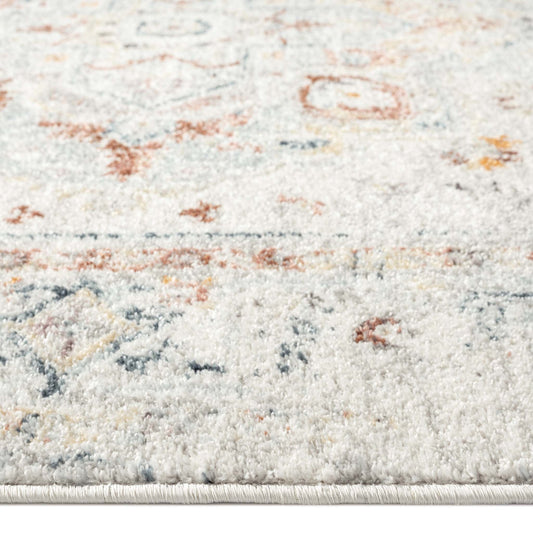
Go low-pile and forgiving. High-traffic zones favour low pile heights, and patterned or distressed designs hide the scuffs and dust between vacuums. Browse the full hallway runners range to compare styles, or read up on the best rug for every floor type if your hallway is tiled or polished concrete.
Frequently asked questions
How long should a hallway runner be?
About 30–40 cm shorter than the hallway itself. For the common 3–4 metre Australian hallway, a 300 cm runner is the standard answer.
Can a runner be too long?
Yes — if it touches the wall or door threshold at either end it will catch, curl and wear. Keep a visible gap at both ends.
What width runner do I need?
Measure your hallway width and subtract 10–20 cm. For most homes that lands on 80 cm; go 66 cm for narrow corridors and 90 cm for wide ones.
Do runners work in kitchens?
Absolutely — along the front of the bench or sink. Choose a washable or stain-resistant design there, for obvious reasons.